

Feeling Overwhelmed by Parental Alienation Claims? You’re Not Alone.
Just hearing the words “parental alienation” can make your stomach drop. If you’re in the middle of a custody dispute in Colorado, you might be worried sick: “Will the court believe me? What actually counts as proof? Am I doing enough to protect my child?” If you’re feeling anxious or confused, we want you to know, that’s completely normal.
Colorado courts don’t just take someone’s word for it. Allegations alone won’t tip the scales. Judges want to see credible, well-documented patterns of behavior, not just a handful of heated texts or a single bad day. We are going to walk you through exactly how courts look at evidence of parental alienation in custody cases. No DIY legal advice here, just a clear explanation of what really matters, how neutral evaluators like CFIs and PREs fit into the process, and why putting your child first is always the guiding principle.
How Do Colorado Courts Define Parental Alienation? Let’s Break It Down.
You might have heard a lot of definitions floating around, but here’s what actually matters in a Colorado courtroom: Judges focus on the “best interests of the child.” That’s not just a feel-good phrase, it’s written right into Colorado law (see C.R.S. § 14-10-124, if you’re curious). Every decision, every piece of evidence, gets filtered through this lens.
So, what does parental alienation look like to a judge? In plain English, it’s when a child’s rejection of a parent isn’t justified by anything that parent did, but instead is encouraged or even created by the other parent’s actions. Maybe it’s subtle, like constant negative comments, or more obvious, like blocking visits or twisting the truth.
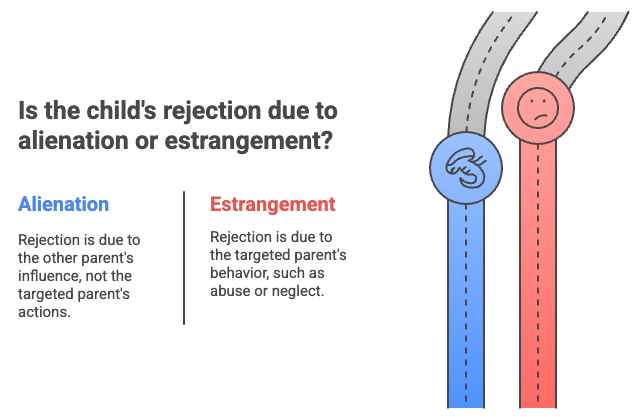
But, and this is important, courts know the difference between alienation and estrangement. Estrangement happens when a child pulls away for a good reason, like real abuse or neglect. Judges aren’t in the business of forcing kids into unsafe situations. They’re watching for patterns that show whether the problem is a parent’s harmful behavior or another parent’s influence.
Courts care about the child’s emotional health, not about “winning” or “losing” between parents.
What Counts as “Evidence”? It’s All About the Big Picture.
Here’s a question we hear all the time: “What actually counts as proof?” The short answer? It’s not about having a smoking-gun text or one dramatic incident. Judges are looking for a pattern, a story that makes sense from multiple angles.
Let’s walk through the types of evidence courts usually consider:
- Texts, Emails, and Social Posts: Sure, these can be helpful. But it’s not about one angry message. Judges look at the tone, timing, and whether there’s a consistent theme over time.
- Witnesses: Think teachers, coaches, or even extended family. If a soccer coach notices your child suddenly bad-mouthing you out of nowhere, that’s something the court might pay attention to.
- Professional Records: Sometimes, a therapist’s notes (when allowed) or a sudden drop in school performance can add context. Your attorney will help sort out what’s private and what can actually be used.
- Parenting-Time Logs: Did the other parent cancel visits again and again? Are there records of refused exchanges? Patterns like these are what really catch a judge’s eye.
- Your Testimony: You will be able to tell your story to the judge. You can explain your observations of your child’s behaviors and how it has changed over time due to the other parent’s feelings towards you.
- Recordings: This is a tricky one. In Colorado, secretly recording someone can land you in hot water. If you’re thinking about recording, talk to your lawyer first, seriously.
Compliance Note: Gathering evidence is not a free-for-all. You’ve got to play by Colorado’s rules. Your attorney will keep you on the right side of the law.
We once worked with a mom who brought in a mountain of texts, hundreds, in fact. At first glance, it looked overwhelming. But when we sorted them by date and context, a clear pattern emerged – the other parent consistently undermined her relationship with their son, sometimes in subtle ways. The judge didn’t read every message, but the overall pattern spoke volumes.

Patterns vs. One-Offs: Why “One Text” Won’t Win Your Case
We get it, it’s tempting to think that one really bad email or text will make or break your case. But here’s the reality. Colorado judges are looking for the forest, not just one tree.
- Long-Term Patterns: Judges care about what’s been happening over weeks or months, not just one bad day.
- Consistency Across Sources: Does your child’s story line up with what teachers and therapists are seeing? Are your logs and emails telling the same story?
- Credibility Matters: If three different people, say, a teacher, a grandparent, and a coach, all notice the same concerning behavior, that’s powerful.
In our experience, courts look for alignment across sources. It’s about telling a story that makes sense from every angle.
We remember a dad who came to us convinced that one voicemail would “prove everything.” We listened, but then we asked: What’s the bigger picture? We helped him pull together school records, emails, and even a note from his child’s therapist. That’s what made the difference.
Neutral Evaluations in Colorado: CFIs and PREs, What’s the Deal?
Let’s talk about something that makes a lot of parents nervous: court-appointed evaluators. You might have heard the terms CFI (Child & Family Investigator) and PRE (Parental Responsibilities Evaluator) tossed around. But what do they actually do?
- CFI (Child & Family Investigator): Think of a CFI as a fact-finder. They do interviews, maybe some observations, and put together a report for the court. It’s quicker and more budget-friendly.
- PRE (Parental Responsibilities Evaluator): A PRE goes deeper, sometimes including psychological testing or home visits. It’s more expensive but can be really thorough.
Judges don’t blindly follow what these evaluators say, but their reports carry a lot of weight, especially if their findings line up with other evidence.
What are evaluators looking for?
- If a child suddenly rejects a parent and uses adult-sounding phrases (“He’s always been emotionally unavailable”), that might be a red flag for alienation.
- If there are real, documented concerns about safety or abuse, that’s more likely to be estrangement.
We always tell our clients: Be yourself, be honest, and focus on your child’s needs. We’ll help you understand what to expect, but we’re not here to “coach” anyone on what to say.
Alienation vs. Estrangement: Why This Difference Matters
It’s easy to get these two mixed up, heck, even some professionals do. But courts take the distinction seriously.
- Alienation: The child’s rejection isn’t based on anything the “targeted” parent did. Instead, it’s usually the result of the other parent’s influence.
- Estrangement: The child pulls away because of the rejected parent’s own behavior, like real abuse, neglect, or other serious issues.
Why does this matter? Because the remedies are totally different. If it’s alienation, the court might order therapy, more parenting time or makeup parenting time for the alienated parent, or communication guidelines for the parent causing the problem. But if it’s estrangement, the focus is on keeping the child safe.
What Can the Court Actually Do? (And What Not to Expect)
Let’s set some realistic expectations. If the court finds strong evidence of parental alienation, here are some things that might happen:
- Therapy or Counseling: For the child, parents, or both.
- Co-Parenting Classes: To help parents work together better.
- Make-Up Parenting Time: If you’ve missed out because of alienation, the court might order extra time.
- Changes to Parenting Orders: In serious cases, the court can adjust who makes decisions or even require supervised visits.
But, and this is important, there are no guarantees. Every case is different, and judges have a lot of discretion. The only thing that’s certain? The child’s best interests come first.
Common Pitfalls (So You Don’t Accidentally Hurt Your Own Case)
We see a lot of folks trip up on the same things. Here’s what to watch out for:
- Going Overboard with Evidence: More isn’t always better, especially if you cross privacy lines.
- Thinking One Incident Is Enough: Courts want to see a pattern, not a single mistake.
- Ignoring the Child’s Perspective: Focus on the child, not your feelings about the other parent.
- Mixing Up Alienation and Estrangement: Getting this wrong can backfire.
Compliance Reminder: Before you record, screenshot, or share anything sensitive, talk to your lawyer. It could save you a world of trouble.
How We Present Evidence at Jones Law Firm, P.C.
This is where experience really counts. Here’s how we help our clients put their best foot forward:
- Building a Coherent Story: We organize your evidence, texts, emails, logs, into a clear timeline. We look for patterns and make sure everything lines up.
- Getting Ready for Evaluations: We’ll walk you through what to expect with a CFI or PRE, so you can be yourself and focus on your child.
- Courtroom Confidence: From prepping witnesses to presenting exhibits, we make sure your case is rock-solid and always centered on the child’s best interests.
Don’t just take our word for it. Here’s what one client said:
“Jones Law Firm made a confusing process so much clearer. I felt heard, prepared, and, most importantly, my child’s needs came first.”
Frequently Asked Questions (FAQs)
Not exactly. There’s no specific law making it a crime, but courts take alienating behaviors very seriously when deciding what’s best for the child.
Nope. Judges want to see patterns and consistency, not just one “gotcha” moment.
They’re influential, but not automatic. Judges weigh all the evidence.
You’ll have the chance to present your side, and neutral evaluators help sort out what’s really going on.
You’re Not Alone, We’re Here to Help
If you’re feeling lost or overwhelmed by the idea of proving parental alienation, we get it. This stuff is complicated, emotional, and sometimes downright exhausting. But you don’t have to face it alone.
Colorado courts are looking for patterns that truly affect your child’s wellbeing, not just accusations or isolated incidents. With the right legal team, you can make sure your story is heard and your evidence is presented the right way. Ready to talk about your situation? Schedule a Consultation
Or just give us a call, sometimes, a real conversation makes all the difference.
Legal Disclaimer: This article is for informational purposes only and does not constitute legal advice. For advice about your specific situation, please consult an attorney.
P.S. If you’re still unsure, that’s okay. Reach out, ask your questions, and let’s figure it out together.
