

If you are navigating divorce or custody in Colorado, you have probably been told a lot of “rules.” Most of them are myths.
Colorado family law is fact-driven and forward-looking. Courts do not reward blame, emotion, or blame shifting. They look for credibility, preparation, and decisions that support stability, especially for children.
Believing the wrong thing can quietly hurt your case. Acting on misinformation often leads people to make reactive choices that limit options before they realize it.
Why Divorce Myths Spread So Easily in Colorado
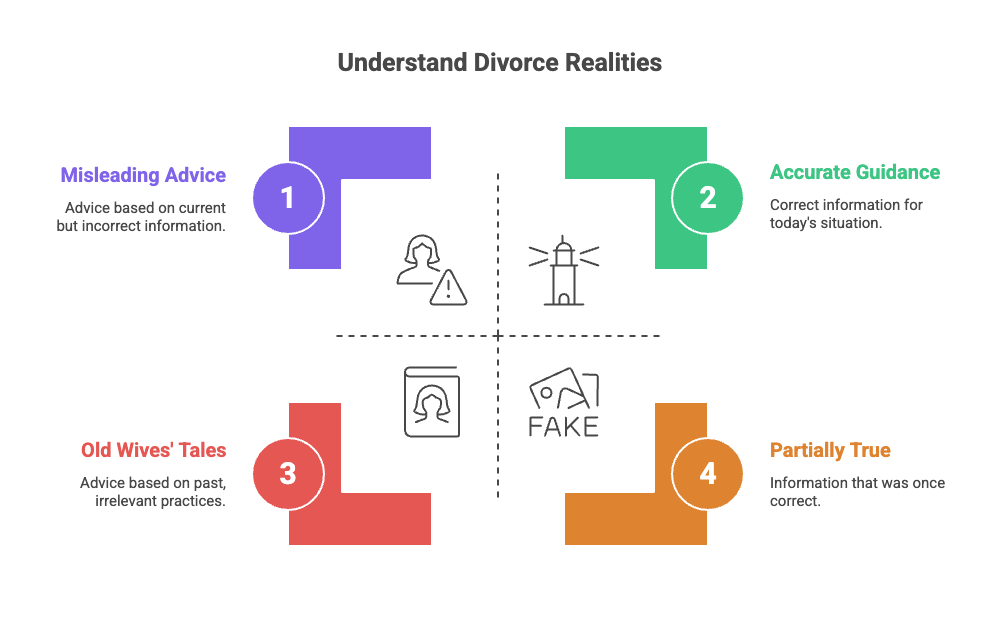
Divorce myths usually do not come from bad intentions. They come from people trying to make sense of a stressful situation with incomplete information.
- Friends’ cases are not comparable. No two divorces involve the same facts, finances, parenting dynamics, or behavior. What happened for someone else rarely predicts what will happen for you.
- The law changes over time. Many commonly repeated “rules” are based on outdated practices that no longer apply in Colorado.
- Other states’ rules get misapplied. Divorce law varies widely by state. Advice that was true elsewhere may be wrong here.
- Social media and AI flatten nuance. Online summaries explain general rules but strip away context, discretion, and human behavior.
For additional guidance on how Colorado family law actually works, explore our Family Law Blog for deeper explanations.
Myth: Colorado is a Fault-based Divorce State
Reality: Colorado is No-fault, and Blame Rarely Helps
Colorado is a no-fault divorce state. The only legal ground required in order to obtain a divorce is that the marriage is irretrievably broken. You do not have to prove adultery, cruelty, abandonment, or other misconduct to get divorced. Marital fault is also not relevant when determining how the case plays out.
Here is what that means in practice:
- Blame usually does not affect outcomes. Accusations about who caused the marriage to end typically do not influence custody, property division, or support.
- Adultery and bad behavior rarely move the needle. While emotionally significant, these issues are not what courts focus on when making legal decisions.
- Financial misconduct is different from moral fault. Hiding assets, wasting money, or manipulating finances can matter because they affect fairness, not because they assign blame.
Judges consistently steer cases away from punishment narratives and toward future stability. Arguments centered on fault often waste time and damage credibility, while fact-based, forward-looking positions tend to carry more weight.
Understanding this early helps prevent unnecessary conflict and keeps the focus where Colorado courts actually place it.
Myth: Mothers Automatically Get Custody, or Custody is Now 50/50
Reality: Parenting Decisions are Fact-specific and Child-focused
Colorado custody law is gender-neutral. Mothers and fathers start on equal footing.
There is no automatic parenting schedule. Courts do not default to 50/50 parenting time or assume one parent should have more time based on role or label.
All parenting decisions are based on the best interests of the child. Judges apply this standard by evaluating facts, not assumptions.
Courts focus on:
- Patterns of involvement, not promises
- Consistency and stability in the child’s routine
- Ability to cooperate and communicate calmly with the other parent
- Support for the child’s relationship with both parents, when appropriate
Judges look at behavior over time. Credibility is built through steady, child-focused conduct, not arguments about entitlement.
Myth: Everything is Split 50/50 in a Colorado Divorce
Reality: Property is Divided Equitably, Not Automatically Equal
Colorado does not require a 50/50 split of marital property. The law requires an equitable division, which means fair under the circumstances, not mathematically equal.
Judges consider factors such as:
- Each spouse’s contributions to the marriage, financial and non-financial
- Economic circumstances moving forward, not just past income
- The value of property each person will receive, not just percentages
In real cases, outcomes often involve trade-offs. One spouse may keep the house while the other retains retirement assets. Others prioritize liquidity, debt relief, or long-term security over equal division on paper.
Focusing only on percentages can be misleading. Strategic decisions about which assets matter most often have a greater impact than whether the split appears equal.
Emotional attachment to specific property can cloud judgment. Courts look past sentiment and focus on feasibility, fairness, and future stability.
Myth: Filing First Gives You an Advantage
Reality: Timing Affects Logistics, Not Outcomes
Filing first does not give you an advantage in Colorado divorce.
- It does not control custody, property, or support. Judges apply the same legal standards regardless of who files first.
- It mainly affects logistics. Filing can set timelines and deadlines, but it does not create leverage or improve outcomes.
- Preparation matters more than speed. Rushing to file without financial documentation or a clear parenting approach often leads to mistakes that are hard to undo.
Judges care about readiness and credibility, not who raced to court. Thoughtful pacing almost always produces better results than urgency driven by fear.
Myth: Mediation is Optional or Means You are Giving Up
Reality: Mediation is Common, Often Required, and Strategic
In Colorado divorce cases, mediation is common and often required by the court.
- Many courts require mediation. Parties are frequently ordered to attempt mediation before hearings or trial.
- Mediation keeps control with the parties. It allows you to shape outcomes rather than handing decisions to a judge with limited exposure to your family.
- Litigation is the exception, not the rule. Most cases resolve through negotiation, not courtroom battles.
- Preparation determines success. Mediation is most effective when parties understand their finances, priorities, and legal boundaries.
Approached strategically, mediation is not a concession. It is one of the most powerful tools available in a Colorado divorce.
Myth: Refusing to Cooperate Protects Your Position
Reality: Credibility and Reasonableness Carry Real Weight
Refusing to cooperate rarely helps in a Colorado divorce. In many cases, it does the opposite.
- Courts notice cooperation and transparency. Judges pay attention to who is organized, responsive, and willing to engage in the process.
- Stonewalling raises red flags. Withholding information, ignoring requests, or creating unnecessary conflict can undermine credibility.
- Judges reward steadiness. Calm, consistent behavior signals reliability and judgment, especially in cases involving children.
Credibility is cumulative. Every interaction, filing, and decision adds up. Courts treat behavior as evidence, not just words on paper. Acting reasonably and strategically often protects your position far more effectively than refusing to engage.
Why Misunderstanding Colorado Divorce Law Can Hurt Your Case
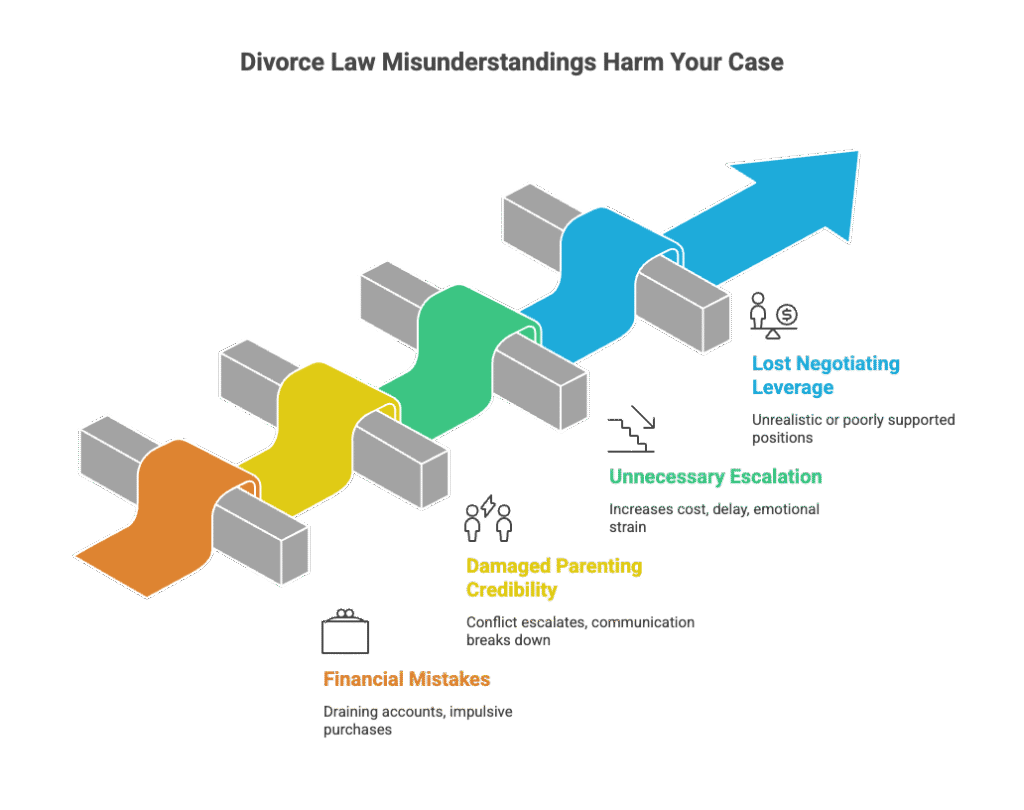
Believing divorce myths does not just create confusion. It often leads to decisions that quietly damage a case.
Common consequences include:
- Financial mistakes, such as draining accounts or making impulsive purchases
- Damage to parenting credibility, especially when conflict escalates or communication breaks down
- Unnecessary escalation, which increases cost, delay, and emotional strain
- Lost negotiating leverage, when early positions are unrealistic or poorly supported
Early missteps shape the entire trajectory of a divorce. Judges, opposing counsel, and mediators all form impressions based on how a case begins and how the parties behave over time.
For answers to common questions, our divorce FAQs provide additional clarity.
What Actually Matters to Colorado Judges
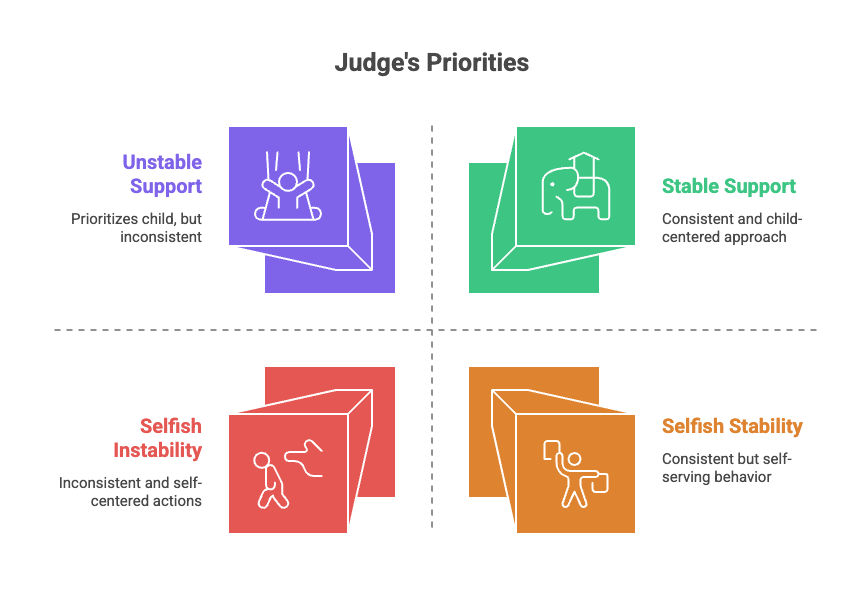
From decades of Colorado courtroom experience at Jones Law Firm, one pattern is consistent. Judges are not looking for perfect people. They are looking for reliable adults who can stabilize a difficult situation and make workable decisions going forward.
What consistently carries weight includes:
- Documentation. Clear, organized records matter more than verbal claims or emotional explanations.
- Consistency. Judges look for steady patterns in parenting, finances, and communication, not last-minute changes.
- Child focus. Decisions that prioritize routine, relationships, and stability matter more than arguments about entitlement.
- Financial transparency. Honest disclosure builds credibility. Secrecy undermines it.
- Willingness to plan forward. Courts favor practical, future-focused solutions over blame.
This framework guides how we represent clients through every stage of a case. If you want your decisions aligned with what actually carries weight in Colorado courtrooms, learn more about our family law services and how we help clients move forward with clarity and strategy.
Judges reward structure and steadiness. Working with a team that understands that difference matters.
Clarity Creates Better Outcomes
Years of working with Colorado families have shown one consistent truth. Confusion makes everything harder. Clarity changes how people show up and how cases unfold.
At Jones Law Firm, led by April D. Jones, we see that when clients understand how the law actually applies to their situation, fear loosens its grip. Decisions slow down. Priorities sharpen.
Clear information replaces guesswork. Strategy replaces reaction. Instead of chasing rumors or responding emotionally, people can focus on choices that support long-term stability.
Divorce is not a verdict on the past. It is a transition that requires planning forward. When the focus shifts from revenge to structure and stability, outcomes improve for both adults and children.
Talk to a Colorado Family Law Team that Plans Ahead
At Jones Law Firm, we take a strategy-first, team-based approach to Colorado family law.
If you are ready to explore your options with clarity, you can:
Reaching out does not commit you to a path. It gives you a clearer understanding of what comes next.
